Baste + Gather

Pattern Workshop

Guest Post: Where the Worlds of Fashion Design And Sewing Collide in Illustrator

Adobe CC Tutorials, Pattern WorkshopLauren Dahl8 Comments
Where-the-Worlds-of-Fashion-Design-And-Sewing-Collide-in-Illustrator-sew-heidi.jpg

Today I have a treat for you guys! Heidi of Sew Heidi has put together a fabulous guest post about how Adobe Illustrator, one of my FAVORITE programs (and the cornerstone of Pattern Workshop), is used in the fashion design industry. Heidi is a partner in a small fashion design company and was able to quit her full-time employment to independently pursue her passion in design (and triple her income in the process!). You can read more about her story here. She also has great video tutorials on her site as well as a super-informative blog. I hope you'll check her out and leave her a comment or two! xoxo I began sewing in high school when my mom taught me the very basics on her vintage Husqvarna Viking - you know the one, that 50lb steel beast that will sew anything. She let me take it away to college and it's been with me ever since. And boy do I love that machine! It’s withstood my brutal abuse and has made it through many things I knew I shouldn’t subject it to but kept doing over and over again (like way too many layers of thick denim and leather...I'm sorry mom!). It has proven its determination many times over as The Little Machine That Could.

While in college at The University of Denver (yes, Lauren and I have discovered that we went to the same school at the same time - although we didn't meet until recently!) I continued to sew, but my main focus was on my degree in graphic design. I learned a lot about using Adobe Illustrator to design marketing collateral (think logos / brochures / websites), but never really thought about how it could cross over into sewing or fashion design - which in my early college days were merely a hobby. It wasn’t until I landed a job as a fashion designer that I realized how much Illustrator is used in the fashion industry as an essential tool.

Once on the job, I learned first hand how to use the AI features I was already savvy with to do brand new tasks. It was eye opening to see how the software was used in such a unique way for fashion design. Illustrator does a lot of things really well, but in my current day to day work as a fashion designer, much of my time is spent drawing fashion flats, creating repeating patterns and colorways, and laying out line sheets.

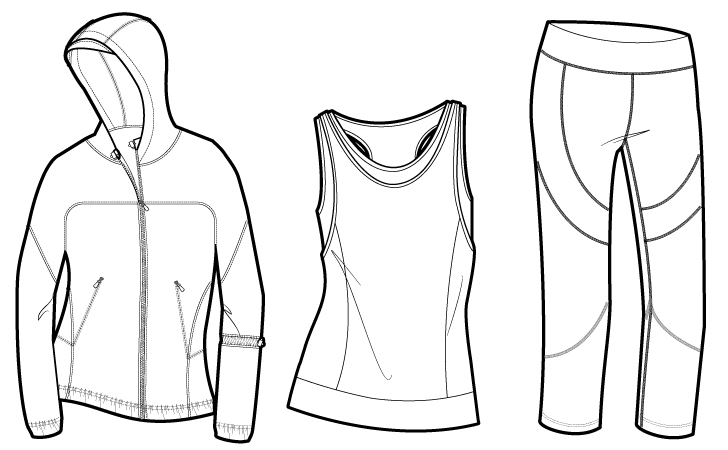
Fashion Flats

These flat sketches are created to accurately represent the garment including all seam lines, stitch details and custom trims. They're typically drawn in black and white and later filled with color to show what the finished garment will look like. The Pen Tool and I became fast friends when I first started working in the industry and to this day it's still one of the AI tools I spend a lot of time with. Baste & Gather meets {Sew Heidi}: How Fashion Designers Use Illustrator to Draw Fashion Flats
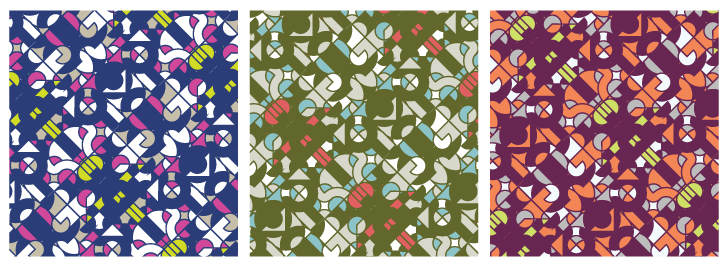
Repeating Patterns & Colorways

One of Illustrator’s most powerful features is the ability to create seamless repeating patterns. Some designers who don't use many prints or who have a separate team of artists that works on textiles may never use this feature, but due to the nature of my work, I am required to wear many hats. I love being able to create textile patterns and to see my designs all the way through from concept to completion - it allows me to thoroughly execute my vision throughout the entire garment. Baste & Gather meets {Sew Heidi}: How Fashion Designers Use Illustrator for Repeating Patterns & Colorways
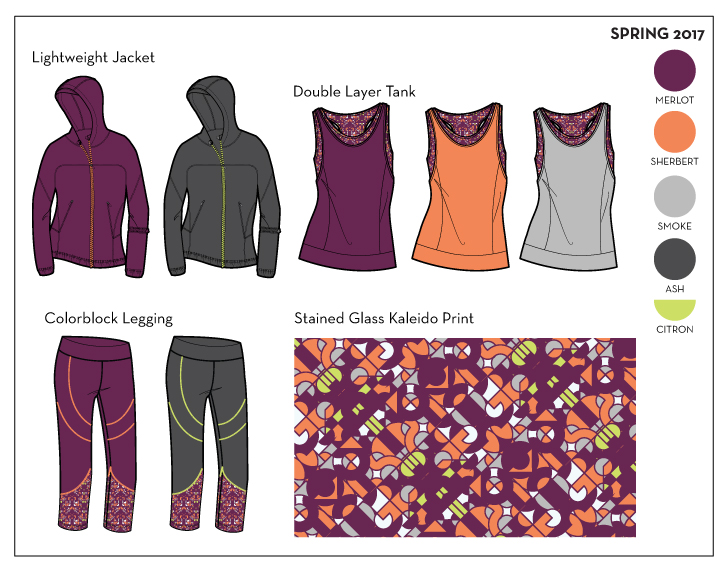
Layouts & Line Sheets

Once the collection is designed, it’s presented to the sales team and buyers in the form of a line sheet or presentation board. This is one of the most gratifying parts of the process*, when everything you've worked so hard on creating comes together to form a unified and cohesive collection.

*I just had to add an extra note here to mention the most gratifying part of the process - receiving finished garments from the factory! All of the work I design is produced overseas, so it's typically 6-8 months or more from the day I start designing to the day I actually see the garments in their completely finished states. Even after many years in the industry, getting those packages in the mail still makes me feel like a kid on Christmas morning. I'll never forget the very first time I saw a garment I had designed in real life - it was a zip up vest with a tiny vine pattern embroidered throughout. I had spent months seeing it only on a computer screen and paper, and holding the finished piece - fabric, trims and all - was the moment I realized I had actually made it as a fashion designer. Baste & Gather meets {Sew Heidi}: How Fashion Designers Use Illustrator for Line Sheets & Presentations
How Many Fashion Designers Don’t Use Illustrator (but many sewers do)

Since you're here on Baste + Gather, there’s a good chance you’re using AI to draft and grade your patterns. If you’ve taken Lauren’s Pattern Workshop then you are absolutely familiar with how to do this! While many sewers focus on using Illustrator for this, it’s not something you see as often in the commercial fashion design world. If designers are drafting and grading their own patterns, they’ll typically use industry software specifically for this, such as Gerber’s Accumark Pattern Design Software. However, it's also very common (especially after essential pattern blocks are created) that drafting and grading for each style is done at the factory level using a chart of POMs (Points of Measure) that the designer provides.

Where the Worlds of Fashion Design And Sewing Collide in Illustrator

Did the black and white fashion flat sketches above look familiar to you? You’ve probably noticed that most commercial patterns include black and white sketches very similar to these on the envelopes. If you are on the path to selling your patterns (or have already started), you’d most likely want to create flat sketches of your designs to show in addition to the photos. The process you would go through to create these flats would be same that we use in the fashion world, and you’ll want to get yourself up to speed on the Pen Tool (if you’ve fought with this tool like many designers have, that’s probably not what you wanted to hear - but I promise that once you master it, everything else will become so much easier!).

How Will You Use Illustrator?

You may not be drafting patterns to sell and instead your focus is on sewing personal projects. For many years, I sewed and sold my designs at boutiques throughout the US, but I never actually sold a sewing pattern. So instead of using AI for drafting and grading, I used it to mock up my designs before cutting and sewing. I found it tremendously helpful to visualize my design before I cut into the fabric only to later decide I didn't like the design (yikes!). Many designers sketch by hand, but since that was never my strength, I found it easier and quicker to design and make edits in Illustrator.

How will you incorporate some of these Illustrator features into your design and sewing process? Or if you’re already using the software in new ways, share some of the creative things you’re working on!

Thanks so much for the great post, Heidi!

Pattern Workshop is ON SALE!

Pattern WorkshopLauren DahlComment
20141122_185436-ANIMATION.gif

And yes, Harper is THIS excited. About the sale...and about fabric. Now through Sunday, September 13 at 11:59pm PST, Pattern Workshop is $20 off! I only do this sale twice a year (Mother's Day and Labor Day-ish), so don't delay. No coupon code is necessary; the discount has already been applied.

Enjoy!

(Also, if you're curious about payment plans, they are coming! BUT, there will be a small additional overall cost if you opt for an installment plan. Take advantage of the sale today!)


Haters Gonna Hate.

Blogging, Miscellany, Pattern WorkshopLauren Dahl47 Comments
haters-gonna-hate.jpg

Thanks to Google Analytics and a sudden flurry of Pattern Workshop sales (yes, that happens even after negative publicity!), I recently realized that I've been the topic of some heated discussion in the sewing blogging community. Yes, GOMI, I'm talking to you. And yes, I know it's happened several times since I launched my course. My husband has physically removed the computer from my hands on multiple occasions in the past, but this time, I feel a response is warranted. Some people (personal friends and students in my course) have come to my defense, but I've never bothered with responding directly. Well, you got your wish. And here's my response.

My students have been called "suckers" for taking my course since I am not a classroom-trained patternmaker. Well, my student body includes Big-4 licensees, retired grandmothers who simply enjoy learning, stay-at-home moms burning the midnight oil to make extra money for their families, disabled pattern designers who can no longer draft on paper, young and resourceful entrepreneurs avoiding the rat race and retired veterans looking to create income streams. I have even had patternmaking professors take my course so they can share the knowledge with their students. There are no "suckers" in my course. Most of my students are smart and driven self starters with dreams of creating successful businesses - whether small or large.

Let's get one thing straight: I DO NOT TEACH PATTERNMAKING. At least, not in the traditional/academic sense. I have never claimed to be a professional patternmaker, and I don't intend to ever become one. My students are expected to either have a working knowledge of pattern drafting already or to be willing to learn on their own using suggested textbooks.

There's a reason why I sew with other people's patterns: I have more enjoyable/profitable/less time-consuming things to do than draft my own clothing patterns. Yes, I have patterns for sale, and yes, I might release more patterns in the future. But that's business. I create(d) patterns because 1) it helped my credibility when I initially released Pattern Workshop, 2) it's a fun diversion from other business activities and 3) it's an additional income stream which helps me provide for my family and support my fabric hoarding tendencies.

But as a side note - I do find it interesting that the same people who decry these amateur, not-professionally-trained designers also take every opportunity to bash Big 4 pattern companies. Are these companies not staffed by professionally trained designers with degrees and years of experience in patternmaking? Where exactly are all these expert patternmakers if not working for large and well-known pattern companies? Do they all work for ready-to-wear designers? Couture houses? Perhaps these brilliant designers know how to fit every curve of a woman's body, yet they don't sell patterns because they don't know how to create a marketable pattern. (But hey, I have got the course for them if they want to learn!)

Should a person not sew if they don't have a degree in garment construction? Do sewing bloggers have no business sharing their creations if they haven't sent designs down a runway? Is the self-taught sewist banned from teaching because she has no classroom training? It seems that the sewing blogging community fully supports a self-taught sewist/designer until she tries to (and succeeds at) monetizing her learned skills. The second a blogger starts making money doing something she's learned, this community develops a crab mentality toward her. I've seen it happen again and again.

But just like a pattern designer might take a course in small-business accounting (from someone who is inexperienced in patternmaking) or the history of costume making (from someone equally inexperienced in patternmaking), he/she takes my course to learn software. The beauty of my course (or so I've been told) is that I only teach the parts that are relevant to creating digital patterns. There's no need to spend years learning the myriad capabilities of Adobe programs when I can teach it in 29 lessons. And when I say "lessons," we're not talking about 2-minute videos. The course contains hours and hours of video instruction and worksheets that shave weeks and even months off each designer's lead time. "Lessons" is a subjective term that shouldn't be debated without a peek into my course material.

What I DO teach is Adobe Illustrator and InDesign for the purpose of creating sewing patterns. Yes, I am self-taught. No, I do not have a degree in patternmaking or graphic design. A comment was made recently that I must, "at most, have two years of experience using Illustrator." Well, no, not exactly. I have been using Illustrator since 2004...so, 11 years. As for InDesign, I started using Quark XPress (a similar and now defunct software) in high school and learned InDesign in 2004 or 2005. So again, 10+ years. I also teach fabric design for BurdaStyle, and no, I am not a fabric designer. I joke that I'm a "technician, not an artist." My goal is (and has always been) to give artists/designers the skills they need to get their ideas out of their heads and into the hands of those who can enjoy their creations (myself included).

There is a survey at the end of my course, and students are able to rate several aspects of it on a scale of 1-5. I have never gotten lower than a 3 on any measure, and those are VERY rare. Even the few 3 ratings I have received have been accompanied with glowing, thoughtfully written reviews about everything else in the course except for maybe one or two areas the student thought I could improve. It is usually the InDesign lessons which receive lower scores, and that is because I don't go into as much detail on it as I do on Illustrator.

As for refunds, I have given two since launching the course. One was for a woman who enrolled twice and forgot that she'd already purchased the course. The other was for a designer who emailed me around the time I had my son asking if the course was for her. She was hoping to draft patterns for manufacture, but I didn't respond in time to tell her that it probably wouldn't help her since most factories require a certain type of file that Illustrator doesn't provide. She kindly asked for a refund since I was slow in responding, and I was happy to provide it as she was starting up a business on a limited budget.

These same antagonists have accused me of single-handedly "ruining the PDF pattern business" with my course by flooding the market with poor-quality patterns. I wholeheartedly disagree. Those who are truly driven to create and sell PDF patterns will figure it out one way or the other. I have one student who previously digitized her patterns in PowerPoint. POWERPOINT, people. (THAT is determination.) And I have several others who traced their patterns with Sharpie markers and scanned them into PDFs. What I have done is given people who would be putting patterns out ANYWAY the tools to make them better.

In addition, anyone who understands the free market economy knows that the leaders in any industry will naturally rise to the top, and the companies who sell subpar products and provide bad customer service will fail. The same is true in the PDF sewing pattern business. If anything, I am dramatically increasing the selection of PDF patterns available to sewists by giving would-be designers the tools they need to stop dreaming and start selling. Word of mouth will prevent unskilled patternmakers from going far in our community.

So, I guess my bottom line for all the haters out there is this: I'm just gonna shake, shake, shake, shake, shake...shake it off, shake it off. And I'll do so while sewing a crappy pattern from one of my crappy students who took my crappy class. And we will all be over here looking fab in our handmade clothes made from fabric we purchased with our millions of dollars in profit we swindled from our sucker students and customers.

Because you know, we totally make millions.

You're welcome.

600 Student Celebration - and a Pattern Workshop Giveaway!

Pattern WorkshopLauren Dahl61 Comments
pattern-workshop-giveaway.jpg

A year and a half ago, I created this little course about digital pattern drafting. It started out simple and was going to be a few videos. It grew into 30+ lessons, hours and hours of videos and...drumroll please...over 600 students! I am continually amazed at all the innovative patterns that have been released from this group. Seriously, you guys, amazed. So, to celebrate, I'm giving away an enrollment in Pattern Workshop. And in the coming weeks, I'll be sharing some of the fabulous patterns that have been released by my students right here on the blog. In the meantime, you can check out the student work page on Pattern Workshop (which is always a work in progress with dozens more to be added even as I type!).

Plus, if you are totally impatient (like I am), and you go ahead and enroll between now and the close of the giveaway, you will get a full refund of your purchase price if you end up winning the giveaway. (This isn't valid for purchases made prior to July 20, 2015 at 3:35pm PST or after 12AM on August 1, 2015.)

So, don't wait! Start entering using the widget below! GOOD LUCK!

a Rafflecopter giveaway